
Apex City Directory Holdings
Apex does not have to appear in a stand-alone town book to be useful. The Wake County Public Libraries suburban catalog record explicitly names Apex among several communities, while the Raleigh record supplies earlier regional context. Read the locality or geographic index before assuming that every listing represents the town core. A postal city, a rural route, and a later town boundary can point to different places. The table separates cataloged holdings from broader collection leads, so a missing year is not mistaken for a missing household.
| Collection | Years | Where Held | Access |
|---|---|---|---|
| Wake suburban directories | 1969, 1970, 1971, 1974-1977; 2021 vols. 1-3 | Wake County Public Libraries catalog | Cataloged regional volumes; inspect the Apex locality index |
| Raleigh directory volumes | 1880-1881, 1887, 1891, 1896-1897, 1899-1900, 1907-1908, 1909-1910, 1911-1912, 1913-1914, 1917, 1918-1922; later series from the 1980s | Olivia Raney Local History, Raleigh | Physical local-history and catalog route |
| DigitalNC scanned volumes | 1875-1876 Chataigne Raleigh scan located; 1940s Hill's Raleigh examples listed | DigitalNC | Online scans with searchable and downloadable records |
| Chatham local-history materials | Newspapers on microfilm from 1878; dates vary by item | Chatham Community Library | Local-history, microfilm, and library-resource route |
| Local archive leads | Exact item years not published | Apex Historical Society and State Archives | Finding aids, local works, and archival research |
The cataloged suburban sequence begins in 1975, with the listed earlier and later volumes providing useful checkpoints rather than proof of uninterrupted publication. Branson, Maloney, Polk, Hill, R.L. Polk & Co., cross-reference, and criss-cross labels appear in the Raleigh catalog notes. Preserve the printed publisher instead of treating those names as interchangeable.
Apex Directory Volumes Beyond Raleigh
The Apex-specific suburban record is the first shelf to check for later twentieth-century work. Its coverage also includes Cary, Garner, Fuquay-Varina, and other suburbs. That breadth matters: a name or street can be indexed under a locality heading that is broader than the present municipal limit. Compare the printed address with a parcel, map, or survey before translating it into a modern Apex address.
Use the Wake suburban directories catalog record to identify the available volume before visiting or requesting help. The catalog is the source for the holdings claim, not a summary from another directory. Note the volume title, year, locality heading, page or image, and whether the line is alphabetical or cross-referenced.
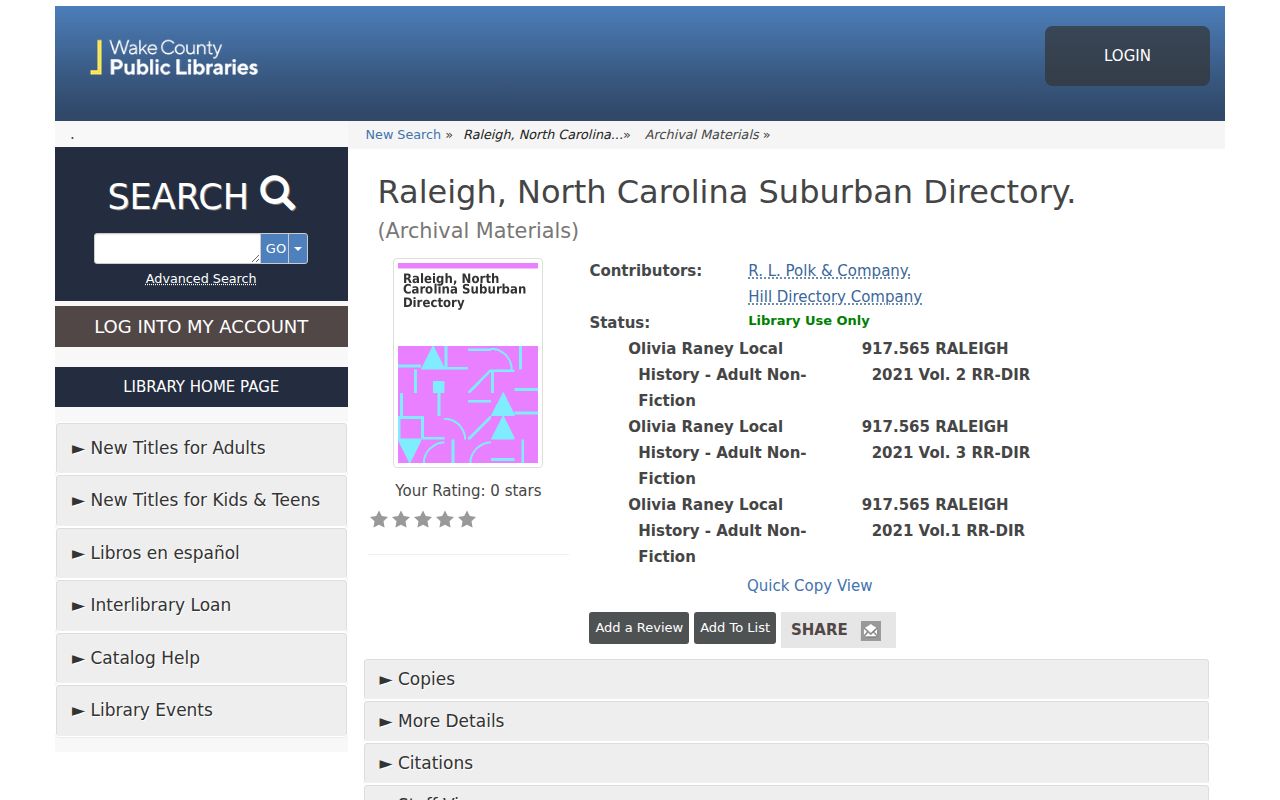
The catalog view helps distinguish a regional directory lead from an Apex-only register, which keeps a locality label from doing more work than the book supports.
Note: Compare the volumes immediately before and after a listing because publication timing can lag behind a move.
Apex Directory Regional Context
Early research often needs Raleigh material as regional context, not as a substitute for an Apex household record. The Wake Raleigh directory catalog record identifies Olivia Raney Local History call number 917.5655 RALEIGH and the cataloged early runs. The physical collection is the route for volumes, microfilm, and local-history reference material that has not been placed in a public scan.
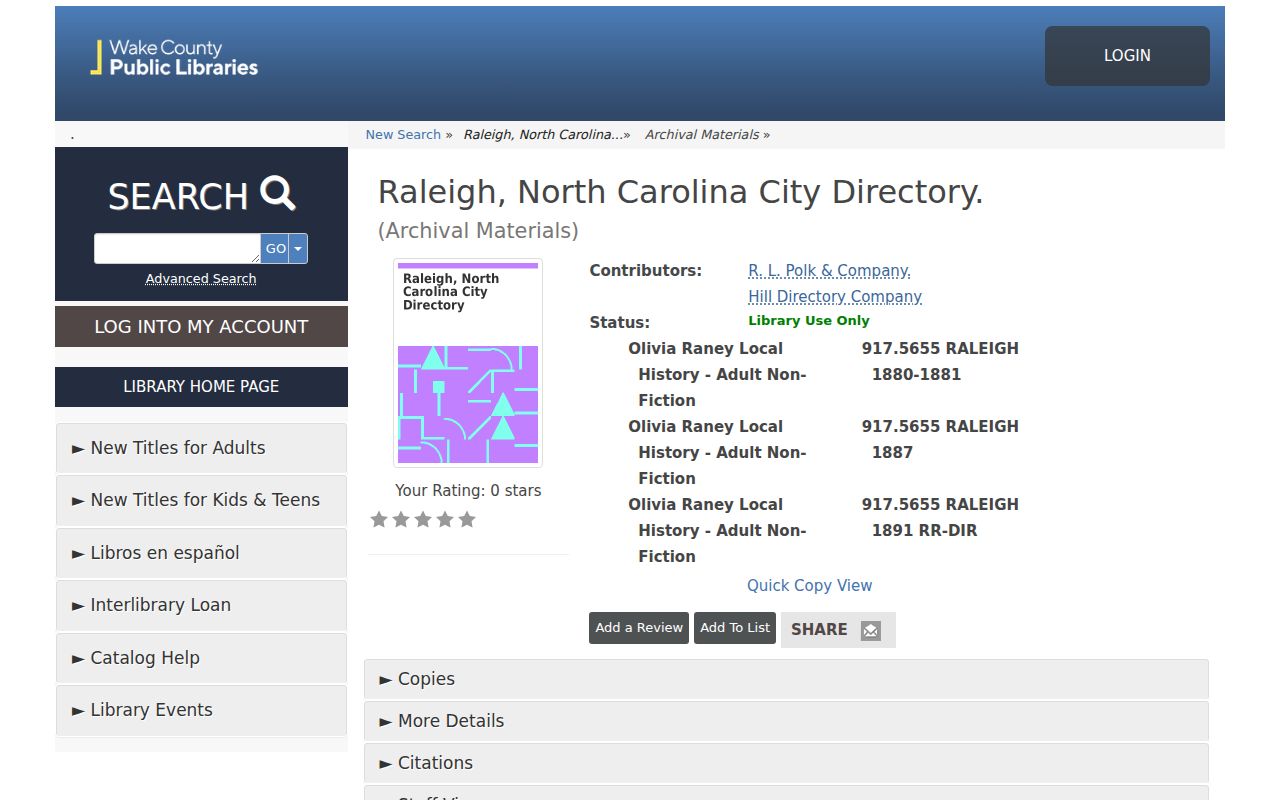
Olivia Raney is a records branch, not evidence that every Raleigh entry belongs in Apex. Pair the locality heading with the address wording and a second source.
A name that appears in a business or cross-reference section must keep that printed role. It should not be recast as a household listing. A missing name can reflect coverage, spelling, lead time, or a different locality heading, so test variant spellings and adjacent years before drawing a conclusion.
Apex Directory Scans at DigitalNC
DigitalNC's scanned directory collection offers a different access channel: digitized scans with searchable and downloadable records. A 234-page Chataigne's Raleigh City Directory for 1875-1876 and 1940s Hill's Raleigh examples were located during the research. Record the exact selected item and its stated year. The collection landing page alone does not establish coverage for a requested Apex address.
Search results are a starting point. OCR can miss initials, tight columns, damaged type, and abbreviated roads. Check the page image, its neighboring entries, and the printed instructions or abbreviation list. Then compare the line with a deed, census, tax, newspaper, or historic-survey lead as appropriate.
For an older property trail, the state genealogy-of-a-house guide recommends combining directories with deeds, HPOWEB surveys, maps, and other records. That mixed record bundle is stronger than a single text-search hit.
How to Read an Apex City Directory Listing
A careful transcription records what the volume actually prints, including uncertainty. Directory formats change by publisher and year, so do not assume that every run supplies a spouse, owner marker, or occupation field. Capture the exact entry first, then describe its listing type. The inventory below separates a directory observation from the later evidence used to corroborate it.
| Volume and publisher | Exact year, title, and printed publisher |
|---|---|
| Locality and name | Locality heading plus the printed surname, given name, initials, suffix, and spelling |
| Address wording | Street address, rural route, post-office wording, or unit exactly as printed |
| Page and listing type | Page or scan image, and whether it is household, business, institution, or cross-reference |
| Cross-reference and neighbors | Cross-reference status and one or two adjacent street entries when useful |
| Corroboration | Deed, census, tax, newspaper, minute, map, or survey lead, with its separate date and role |
- Criss-cross directory
- A street-order section that can be searched by address and number, then checked against the alphabetical name section.
- Householder index
- A name listing keyed to the printed household name; confirm the volume's own arrangement before treating it as a complete household list.
- Abbreviation key
- The volume's printed legend for shortened words and marks. Capture it with the entry because meanings can vary between publishers.
Preserving the source's form matters in Apex. An historic line may use a rural route, a post office, or wording from before later annexation. It is a dated record of a printed listing, not proof of a current address or household.
Apex Directory Address Changes
Historic street language needs a second look before it is matched to a current parcel. Apex began as a railroad station in 1854, received its first train in 1869, and incorporated in 1873. Early records may therefore use railroad, depot, road, post-office, or neighboring-locality vocabulary rather than a modern subdivision address. A directory line from before incorporation may not belong to an incorporated-town record at all.
Road spelling can matter even in recent material. Council approved the corrected name Squall Walden Lane in 2022 after an earlier form appeared in records. Search both forms when the printed street returns no match, and consult Town minutes or archival material rather than silently changing the source text. The Town's corporate-limit history also means a location described as Apex in one era may sit outside a later boundary.
Note: Keep the historical road form beside the current form so another researcher can reproduce the search.
Apex Directory Milestones
The available directory trail is uneven, but its known points make a useful research timeline. These are collection dates and contextual milestones, not a claim of continuous publication or complete Apex household coverage.
- 1854-1873: Railroad-station charter, first train, and incorporation frame the earliest search vocabulary.
- 1875-1876: A Chataigne's Raleigh directory scan is located through DigitalNC.
- 1880-1922: The Wake Raleigh catalog identifies scattered early volumes, including Polk, Hill, Branson, Maloney, and cross-reference forms.
- 1969-1977: Cataloged suburban volumes explicitly include Apex among regional communities.
- 1980s-2021: Later Raleigh series and 2021 suburban volumes provide later catalog checkpoints.
For a downtown building, add historic-district maps, National Register material, local books, and the printed directory page to the chain. A historic designation, ownership record, and directory listing can all describe the same place differently.
Tracing an Apex Directory Household
Use an annual or scattered run as a series of dated observations. Directories can identify a printed household head, a business, or a cross-reference, while census schedules describe a household on a federal enumeration date. Neither role should be expanded beyond the source. The practical aim is to build a dated trail with a clear next source, not to fill every gap with an assumption.
- Find the first likely listing and save the exact title, year, locality heading, page or image, and printed name.
- Check an earlier and later available directory. Record each address or role change without assuming the move date.
- Use the criss-cross or street section, when present, to test the number and nearby entries against the name listing.
- Pair the closest directory years with the relevant federal census year, keeping the census date and directory publication year separate.
- Test the address against a deed, tax record, map, newspaper, local-history item, or survey. Label whether it names an owner, occupant, grantor, grantee, or narrative subject.
If a listing vanishes, consider a move, a new locality heading, publication lag, an altered spelling, or coverage limits. The NARA census route and local newspaper material can supply a dated comparison, but an absent directory line is not evidence of death or a complete address history.
Apex Archive Routes for Missing Years
When Wake-oriented catalogs fall silent, choose the custodian by the address and period. The Chatham Community Library Local History & Genealogy route is especially relevant for the small Chatham-side Apex edge. It describes family, church, community, troop, cemetery, census, court-minute, will, tax-scroll, and newspaper materials, including microfilm of newspapers dating to 1878. It can corroborate an address that is not well served by Wake regional volumes.
The North Carolina State Archives collections and county box lists are the branch for older county records such as estates, taxes, land, wills, marriages, and court materials. The Apex Historical Society has local books, newsletters, more than 85 oral histories, archives, and historic-house programming. Its public page does not provide a full finding aid, scan inventory, universal research fee, or published appointment rules, so confirm an item and access terms directly before relying on it.
A local archive source can explain a building or community name, but it should be cited alongside the specific deed, directory page, map, or census record that supports a time-specific claim.
Consult the State Archives collections page before an archival request because its collections and county finding aids set the proper route.
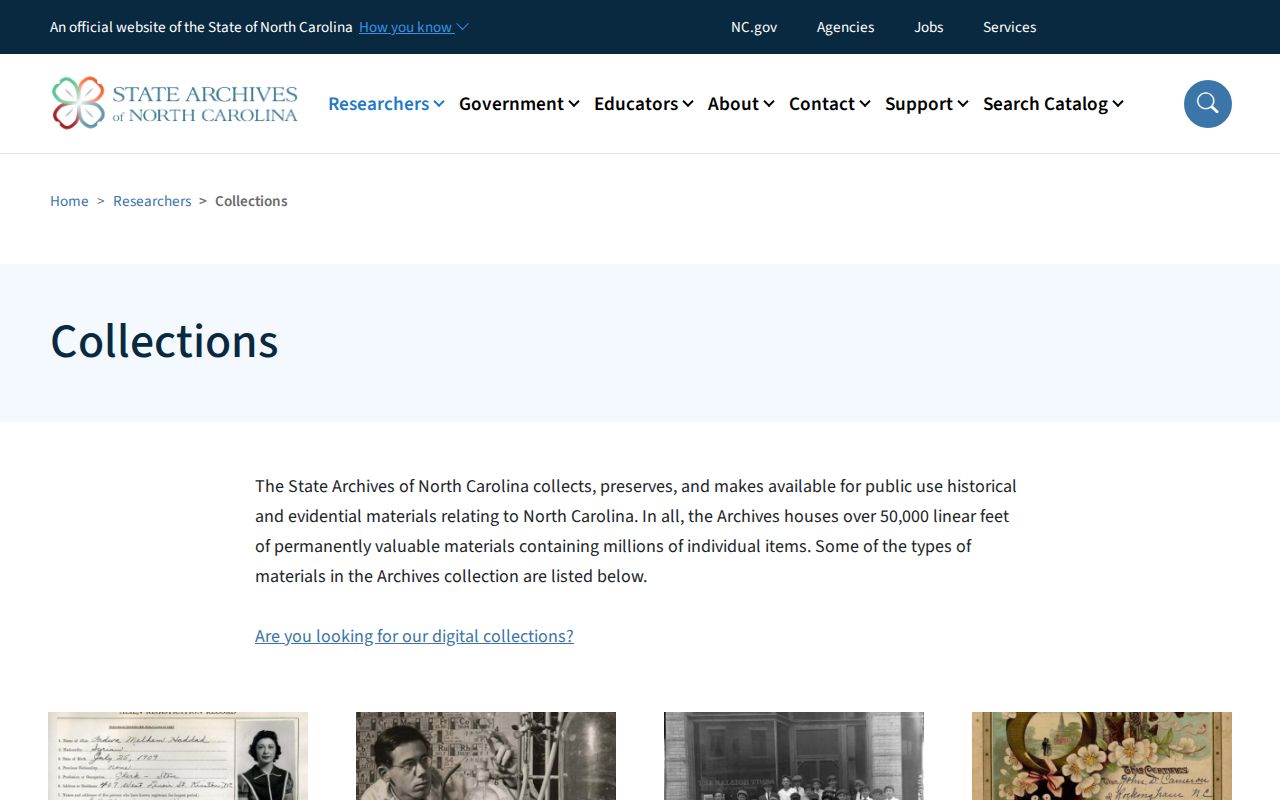
The State Archives route complements library holdings when the question shifts from a printed directory listing to the county record or archival material behind it.