
Apex Previous Residents by Era
An earlier address history is best traced as a dated trail. Wake holds most Apex parcels, but the small southeast edge lies in Chatham County, so first confirm the parcel's county. A landowner, a directory-listed occupant, a census household, and a person in an archive record can be different roles. The sources below provide separate parts of the trail, and their stated coverage should not be stretched across an unlisted year.
| Source | Years It Covers | Where Held | What It Shows |
|---|---|---|---|
| Wake recorded land index | Legacy collection reaches July 1785; current and legacy applications split in April 2025 | Wake County Register of Deeds | Recorded deeds, plats, releases, maps, and grantor/grantee trail |
| Chatham land records | Dates vary by indexed instrument | Chatham Register of Deeds and land-record route | Deeds, easements, rights-of-way, mortgages, maps, and related records |
| Regional directories | Raleigh volumes from 1880-1922 with later series; suburban Apex volumes in 1969-1977 and 2021 vols. 1-3 | Wake catalog and Olivia Raney Local History | Printed names, addresses, locality headings, and cross-reference leads |
| Federal census | Available federal census research extends through 1950 | National Archives and library research routes | Dated household evidence on the federal enumeration date |
| Town records and permits | Minutes online for 1990-1994 and 2014-present; permit timing varies | Apex Clerk, Archive Center, and ePermits | Municipal actions, address chronology, and issued-permit leads |
Begin with a present parcel key when the target is recent. For a nineteenth-century address, begin with county deeds, plats, tax, estate, and archive terms, then layer in the later directory and census sources. If an Apex-looking address lands in Chatham, switch the recorder and parcel route rather than forcing it through Wake.
Apex Address Record Start
A current parcel card is a starting point, not a historic verdict. The Wake County Real Estate Search can provide a REID, PIN, owner label, physical and mailing addresses, legal description, map keys, sales, and a deed book or page lead. The physical location and mailing address are separate fields. Do not replace the situs address with a post-office or mailing-city label when reconstructing who lived here before.
The practical chain is: address to parcel key, parcel key to the last recorded transfer, transfer to prior instrument, then directory or census evidence for an occupant. Preserve the county, source date, and role at each step. Wake's record is the common path, while Chatham-side Apex calls for the Chatham tax, GIS, and Register of Deeds routes.
Open the North Carolina genealogy-of-a-house guide before assembling the evidence bundle. It recommends combining deeds, directories, HPOWEB surveys, maps, and related records instead of relying on a single address match.
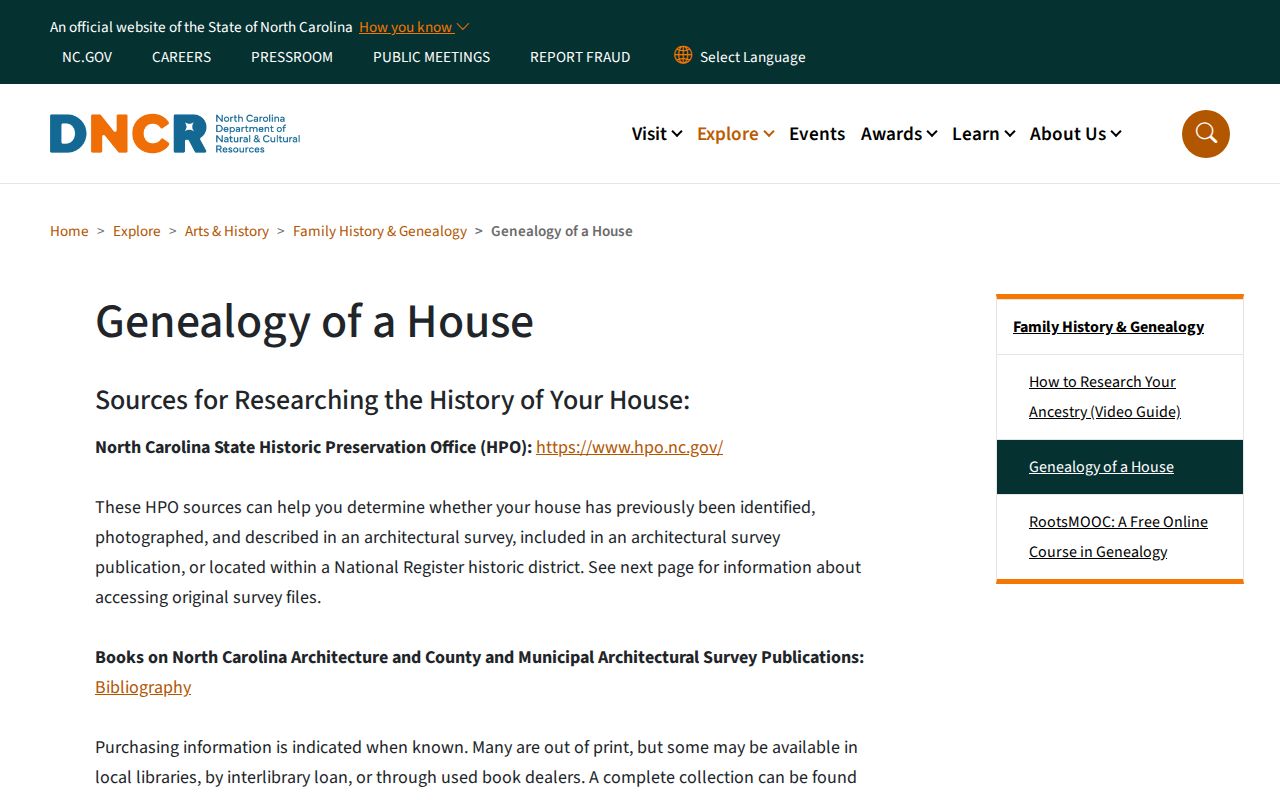
The state guide fits the Apex trail because each record adds a dated role, such as owner, occupant, applicant, grantor, or grantee, rather than one undifferentiated identity.
Note: Record the parcel identifier and legal description before searching names because historic road wording can change.
Apex Deed Record Chains
A deed chain follows the legal interest in a parcel, not a roster of past occupants. At the Wake Register of Deeds, the standard search accepts grantor and grantee first and last names, firm names, dates, book and page, document type, and a Sounds Like option. The portal recommends spelling variants and fewer characters for a broader name search. Relevant records can include deeds, quitclaim deeds, maps, subdivisions, easements, releases, deeds of trust, and judgments, depending on the parcel's history.
- Copy the current parcel's legal description, REID or PIN, owner label, and available deed book and page from the county parcel record.
- Find the current transfer in the correct recorder index. Save the grantor, grantee, recording date, instrument type, book/page, and cited prior instruments.
- Use the seller's earlier acquisition as the next link, checking grantor and grantee roles rather than assuming a surname indicates the same party.
- Repeat backward while comparing the legal description, subdivision or lot, plat, and road wording. Stop and resolve a mismatch before continuing.
- For earlier or missing Wake documents, check both the legacy and current applications, then use the Recorder's request, counter, or information-desk route. For a Chatham parcel, use the Chatham recorder route instead.
- Grantor
- The party transferring the recorded interest in an instrument.
- Grantee
- The party receiving that recorded interest in an instrument.
- Chain of title
- The sequence of recorded transfers and related instruments tied to the same parcel.
- Legal description
- The lot, subdivision, metes-and-bounds, or other land description that is more durable than a street address.
The Wake land-records index reaches back to July 1785 in the legacy collection. A recorded-document request can use a document type, book/page, date, grantor or grantee, property address, or subdivision and lot description. The request form, information desk, and office route are useful when an online result needs an official copy or the expected document is not available through the interface.
Apex Land-Record Transition
Wake launched its new Land Records application on April 21, 2025. Legacy recorded documents through April 17, 2025 remain in the old application. A missing older instrument in one interface is therefore a route-check problem, not evidence that the transfer did not occur. Date every search and preserve the application used in the research notes.
Chatham has its own remote search at Chatham Register of Deeds online search, and its county land-record route coordinates parcel ownership and GIS information. The public research did not expose a full current required-field list for the Chatham index, so use the live official interface for the exact name, date, or book-page controls. Chatham publishes separate fee schedules, which should be verified before requesting a copy.
For a time-sensitive transfer, a recorded instrument or clerk-certified copy carries a different weight from an administrative parcel snapshot. Keep both where useful, but label the distinction.
Apex Road Record Changes
Address searches can fail for geographic reasons. Apex crosses the Wake and Chatham line, and an assigned postal city does not settle the county. The Town's municipal limits, ETJ, county boundary, and ZIP delivery areas are different layers. Compare the legal description, plat, map key, and county before linking an old directory or deed address to a current house.
Road forms also change. In 2022, Apex Council approved Squall Walden Lane as the corrected form of an earlier spelling found in records. Test both forms, preserve what the historic document printed, and search Town minutes or the Archive Center if the name shift matters to the result. Earlier Apex research may use railroad, depot, road, post-office, or neighboring-locality language because the community began as a railroad station before incorporation.
Notes about road, ZIP, and boundary changes belong with the source record. They explain a mismatch without turning a contemporary address label into an historical fact.
Apex Historical Directory Evidence
Past occupants need a household layer after the ownership trail. The Wake suburban catalog record explicitly includes Apex, with holdings for 1969, 1970, 1971, 1974, 1975, 1976, 1977, and 2021 volumes 1-3. Older Raleigh directory holdings offer regional context. A directory can list a printed household head, business, or cross-reference, so retain the listed role and locality heading instead of treating every line as a full household.
Look for the street and number in a criss-cross section when available, then test the printed name in the alphabetical section. Save the exact title, publisher, year, page or scan image, printed name, address or rural route, nearby entries, and corroborating source. The historical directory collections are described in greater detail on the Apex city directory page.
For a Chatham-edge address, Chatham Community Library can fill a Wake-centered gap with local-history and genealogy sources, court minutes, wills, tax scrolls, cemetery and community histories, and newspaper microfilm dating to 1878. Those materials are corroborating routes, not automatic proof that a named person occupied the house.
Pairing Apex Directories and Census
Pair a directory year with the closest census year, but keep their dates and roles apart. A printed directory can have publication lead time, while a federal census describes a household on its enumeration date. A person absent from one may have moved, been indexed differently, been outside the volume's coverage, or appeared under a different locality. Neither absence proves a death or an unrecorded move.
- Place each directory line on a timeline with its publication year, page or image, locality heading, and exact address wording.
- Add the closest federal census entry as a separate dated household source, retaining the enumeration date and county.
- Compare the directory, census, parcel, and deed descriptions for agreement or conflict in the street, road, rural route, lot, or locality.
- Use a newspaper, archive record, tax record, or map to investigate a gap, and record the next source rather than forcing a link.
Use the National Archives census research page for the federal census route and release information. Census is one piece of the address history, not a current roster.
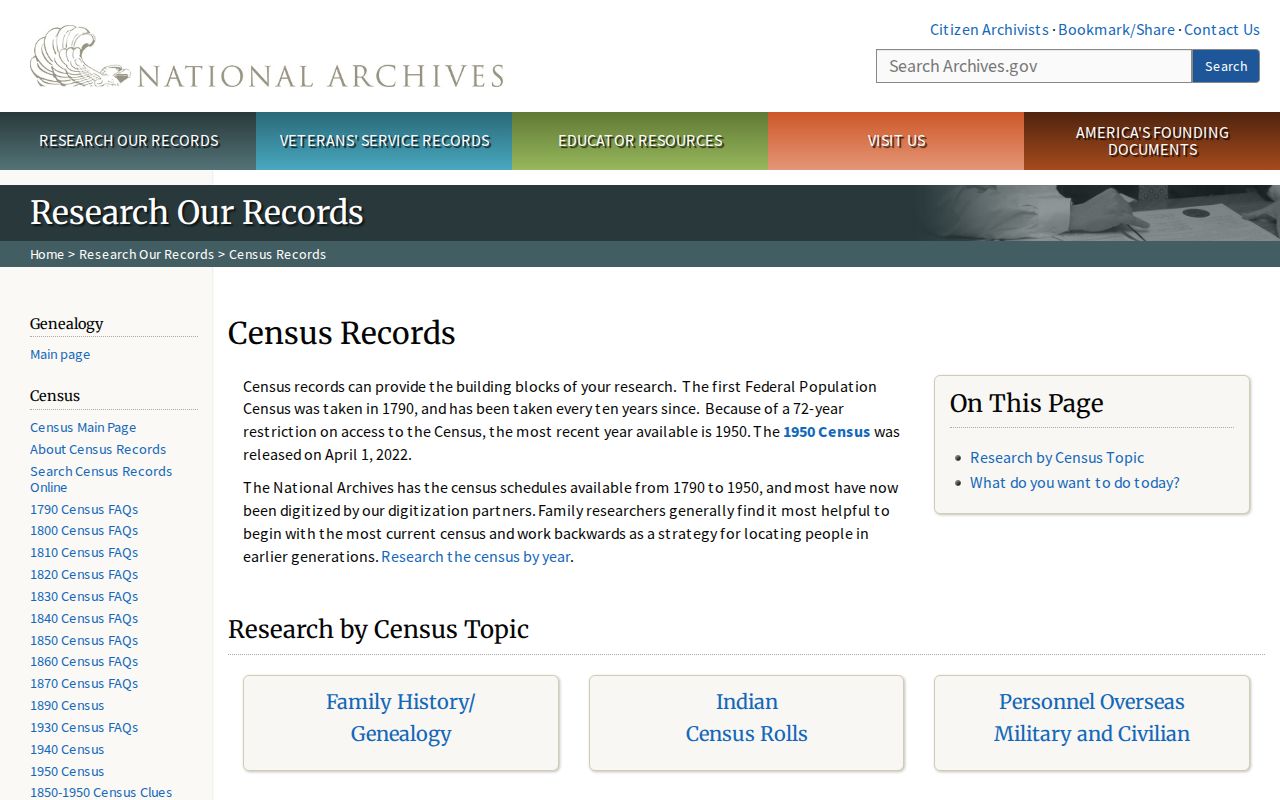
The National Archives route supplies the household comparison layer after the parcel and deed records establish the legal land trail.
Apex Archive Record Routes
Older records often require a branch outside the land index. The North Carolina State Archives county-record box lists and collections route researchers to county estate, tax, land, will, marriage, and court materials. For the earliest period, add county and railroad or post-office vocabulary, since Apex's town history begins with the railroad station charter in 1854, the first train in 1869, and incorporation in 1873.
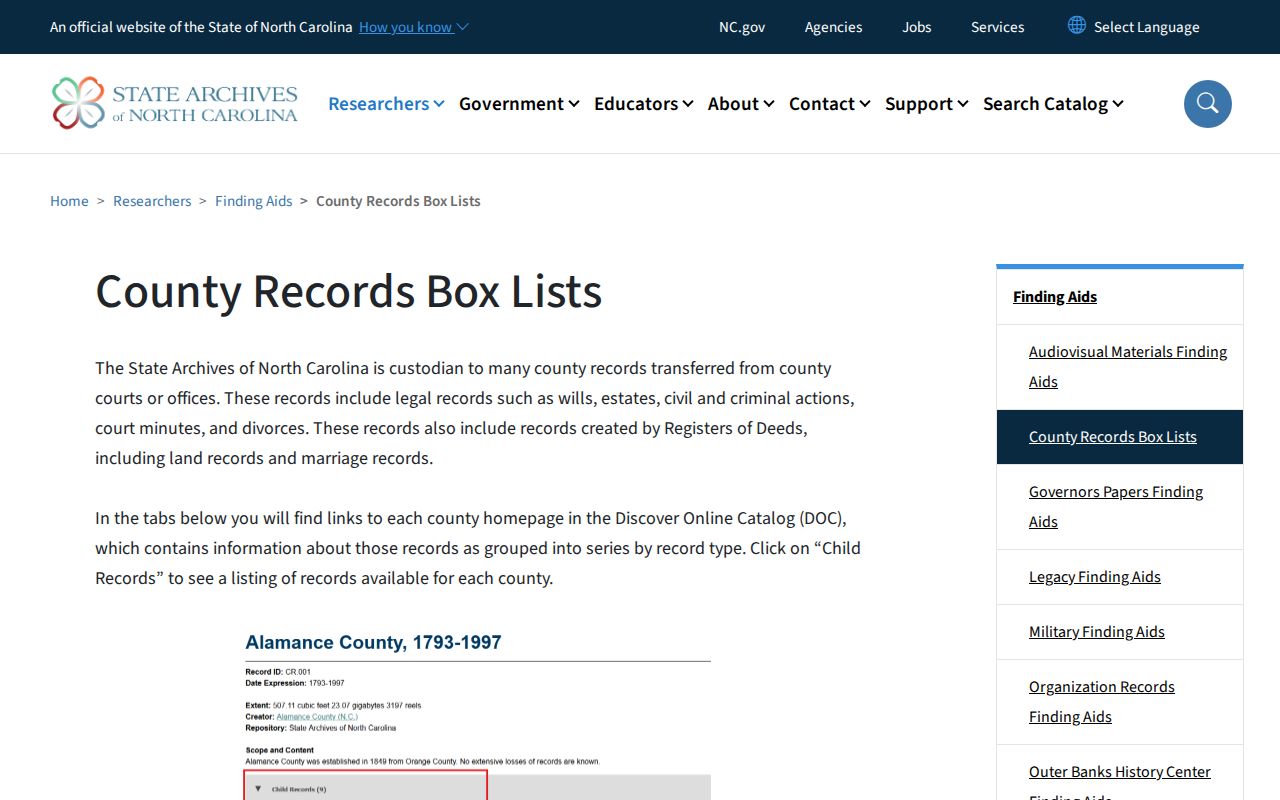
County box lists guide the archival request when a property history reaches estate, tax, will, court, or land material not available in the newer parcel interface.
Vital records have their own custody and eligibility rules. NC Vital Records research directs births before 1913 to county registers, deaths before 1930 to the State Archives, marriages before 1962 to county registers, and divorces before 1958 to county clerks. For later certificates, use the current custodian and its eligibility instructions under the applicable statutes rather than assuming a blanket historical opening period.
The Apex Historical Society offers local books, newsletters, oral histories, archives, and historic-house programming, but its public page does not publish a complete finding aid, scan inventory, universal fee schedule, or appointment rules. The Town Clerk separately holds historical town records from the 1800s to present by appointment, while the Archive Center supports keyword, archive, time-period, and date-range searches.
Apex House-History Records
A useful file keeps the evidence roles visible. For each prior person or owner, record the source year, title or type, repository, page, image or book/page, printed name, role, printed address or legal description, county, confidence, next link, and notes about name, road, or ZIP changes. This inventory prevents a grantor, owner, occupant, or narrative mention from being blended into one claim.
Municipal sources can help with context. Apex agendas and minutes are online for 1990-1994 and 2014-present, while the Town Clerk is the records route for historic municipal materials. A permit or meeting record may date an address event, but it does not by itself establish who lived there.
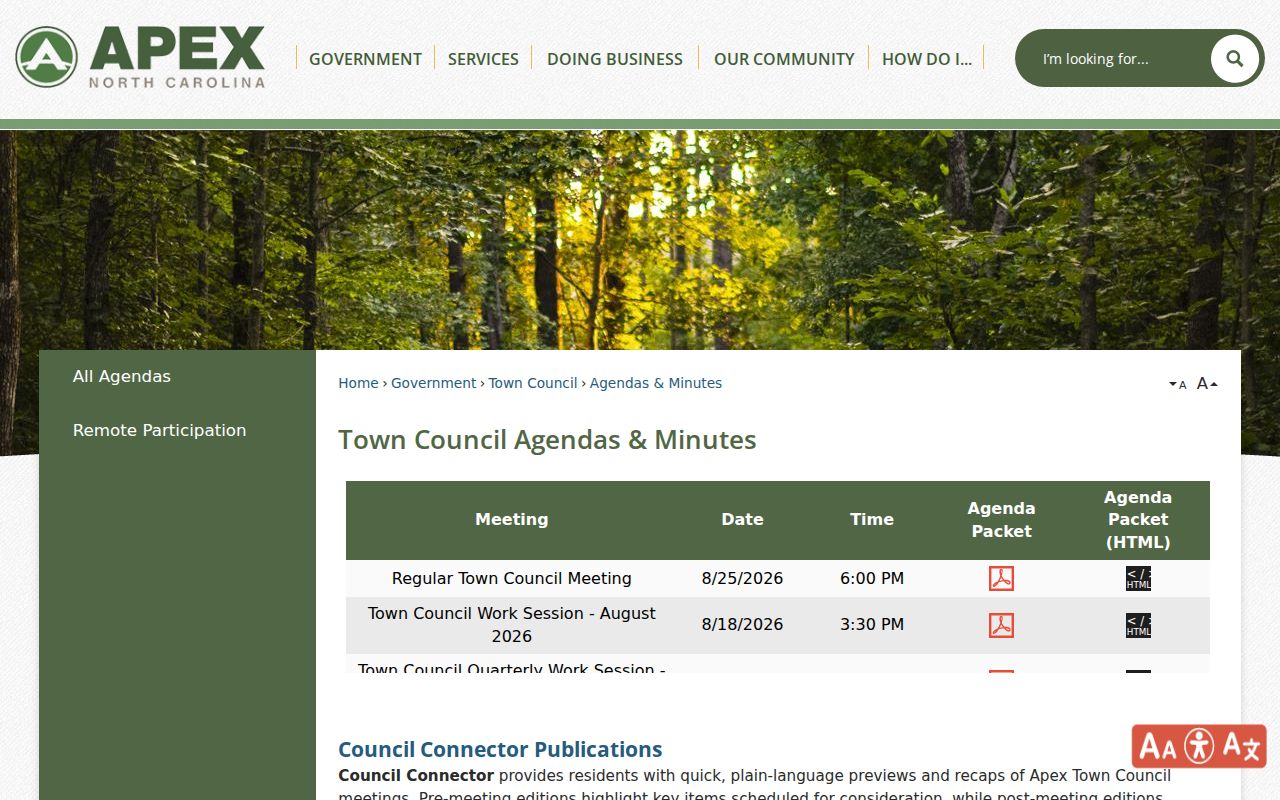
Town records can explain a street, subdivision, annexation, or local project when the land records alone leave the address history incomplete.
Lawful use. Use Apex previous-resident records for family history, estate matters, house history, and personal research. Do not use a past address trail to track, harass, or harm a living person, and do not try to defeat an address confidentiality protection.